New Study Suggests Mantle Convection Explains Earth's Missing Geological History
Researchers believe that slow movements deep within Earth's mantle pushed up ancient continents, causing massive erosion that explains the Great Unconformity.
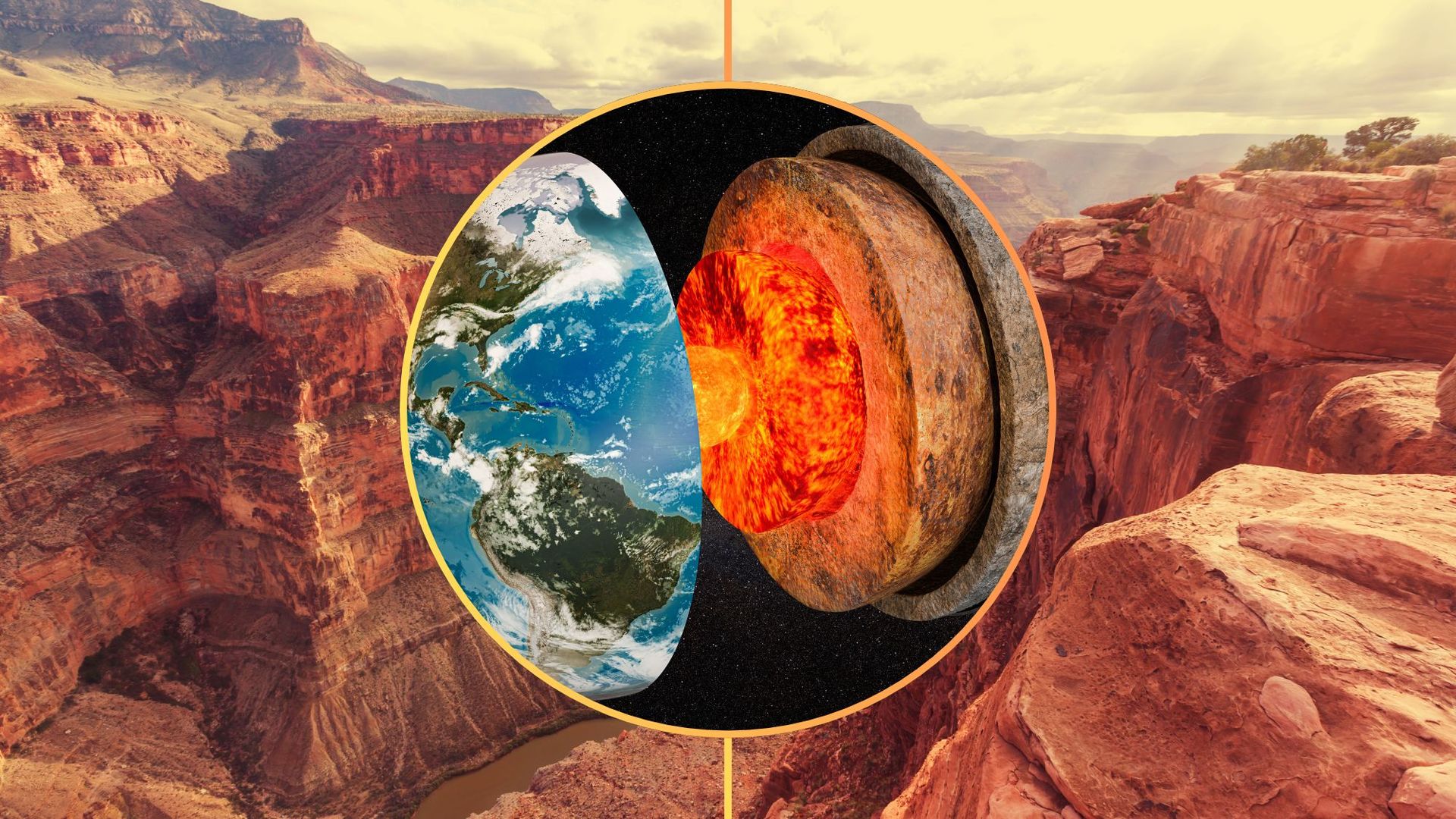
More than a billion years of Earth's geological history has seemingly vanished, leaving colossal gaps known as the Great Unconformity in ancient rock formations across the globe 1. Famous examples include the Grand Canyon in the United States, where rocks separated by hundreds of millions of years sit directly on top of each other 12. Similar gaps, ranging from 200 million to over a billion years of missing history, have been documented across Europe, Australia, Africa, and Asia 12.
Unearthing the Mantle's Role
To solve this decades-long mystery, lead author Santosh Dhungana and co-author Nicolas Flament used computer models to investigate how the slow circulation of hot rock within Earth's mantle affected continents 12. Published in the journal Nature, their research indicates that mantle convection gradually pushed up three major ancient continental regions—Laurentia (modern North America), Baltica (northern Europe), and North China—during the Neoproterozoic Era, approximately one billion to 540 million years ago 12. This prolonged uplift exposed vast land areas to weathering and erosion, wearing away rock formations that had existed previously 12.
Preservation of the Geological Divide
Eroding the rock was only part of the equation; the researchers also needed to account for why these sharp boundaries remain visible today 1. As sea levels subsequently rose relative to the land, newer sediments accumulated over the eroded surfaces 12. Because the timing of the simulated continental uplift and sinking matched geological evidence found in North America, northern Europe, and North China, the findings point to deep subterranean forces as a primary driver of our planet's fragmented geological record 1.
Written with AI from the cited sources and checked against them. Open the sources to verify.